Meta Global AI Developer Hackathon · Indie track

Glasses that help you speak, see and remember

A clip for any pair of glasses and an app. It tells you what to say, describes what is in front of you and remembers what happened. Built on Meta's models.

The web app works in any browser · the Android app needs Android 10 or later · how to install it · the app speaks Spanish first

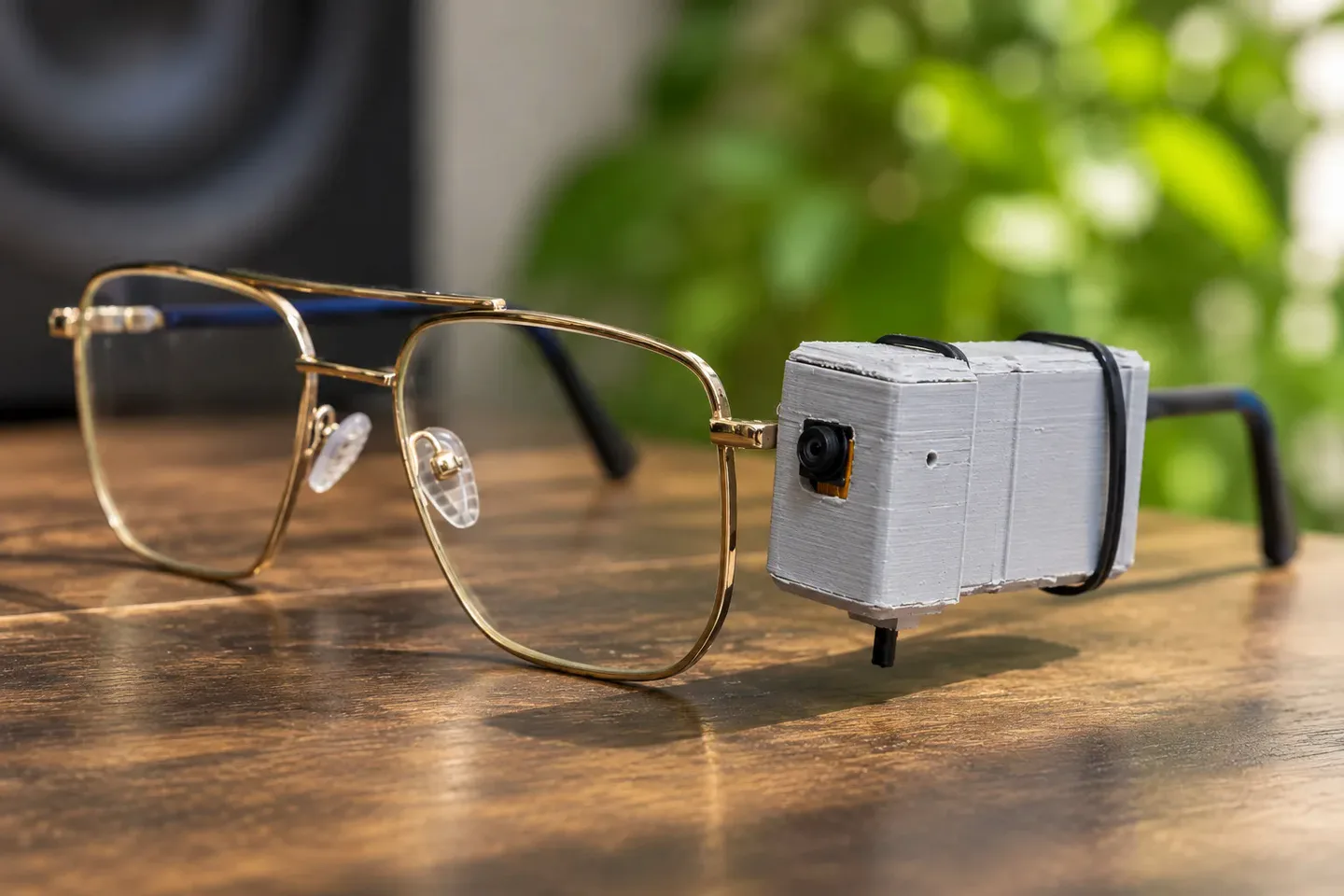
A real photo: thin gold-framed glasses on a wooden table with the Lente clip on the right temple, a grey 3D-printed box with its camera, held on by two rubber bands.
Real photo
QR code that opens the lente.apk download

On a computer? Scan it with your Android phone to get the app.

The demo: Ver reads and describes what's in front of you, Dilo sits in on a call, and the memory finds the keys. The boxes on the first-person shots are a visual overlay, not something Lente draws. Download the video

Why it exists

Think of someone you love. Who no longer sees well.

A grandchild's card, the medicine box, the letter from the bank: it is all right in front of them, and none of it reaches them unless someone reads it. AI glasses for blind people already exist, but they are expensive and mean buying new glasses. In Colombia alone, the last census counted almost two million people with difficulty seeing.

And at work, the meeting moves faster than your second language. «Rulo, can we ship the beta on Friday?» You know the answer, but while you build the sentence in English someone else answers, and the decision is made without you.

You don't need new glasses. With Meta's models, a camera, a microphone and your phone are enough. No clip? The phone does its job.

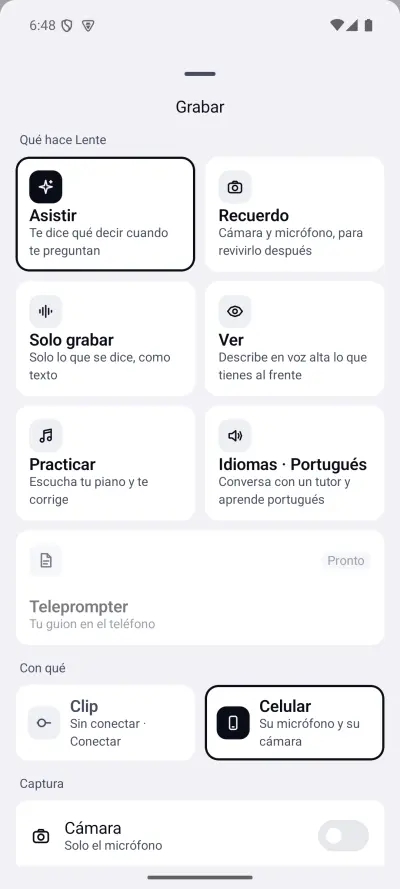
The app's Grabar sheet: Asistir, Recuerdo, Solo grabar, Ver, Practicar and Idiomas, and a choice of clip or phone.
Choose how it helps. Assist, Memory, See, Record only, Practice or a language tutor.
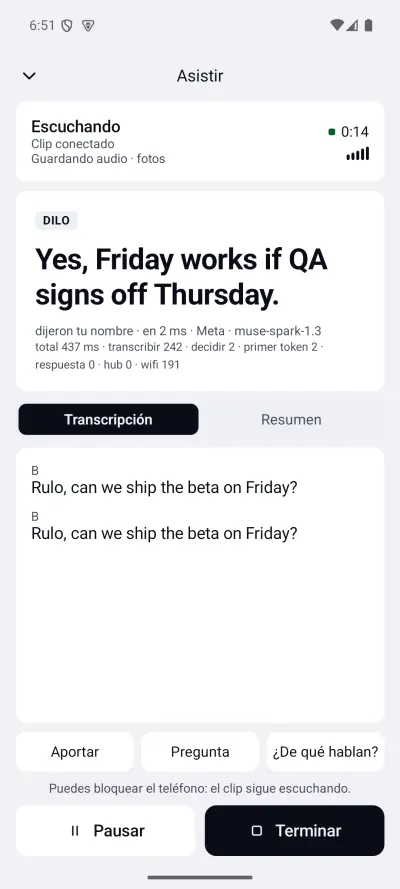
The app while listening: a DILO card says «Yes, Friday works if QA signs off Thursday.» above the transcript «Rulo, can we ship the beta on Friday?».
Assist. The question was for you: the Dilo card brings the line to answer.
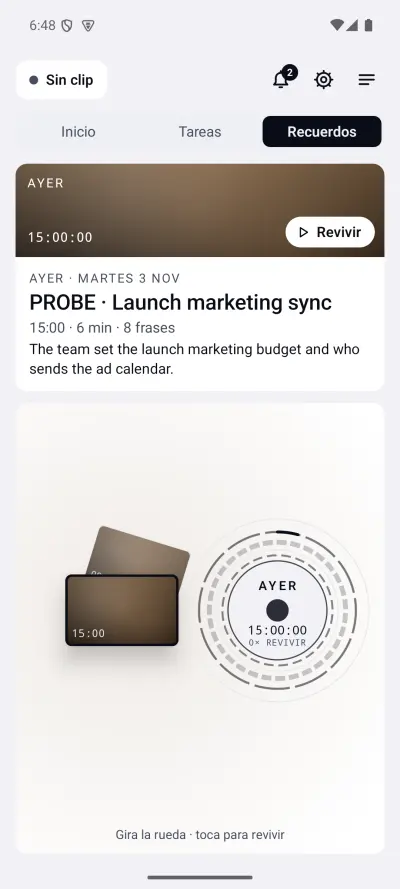
Recuerdos in the app: yesterday's moment with the Revivir button and a time wheel with cards.
Memories. The moments of your day: turn the wheel, tap one, relive it.
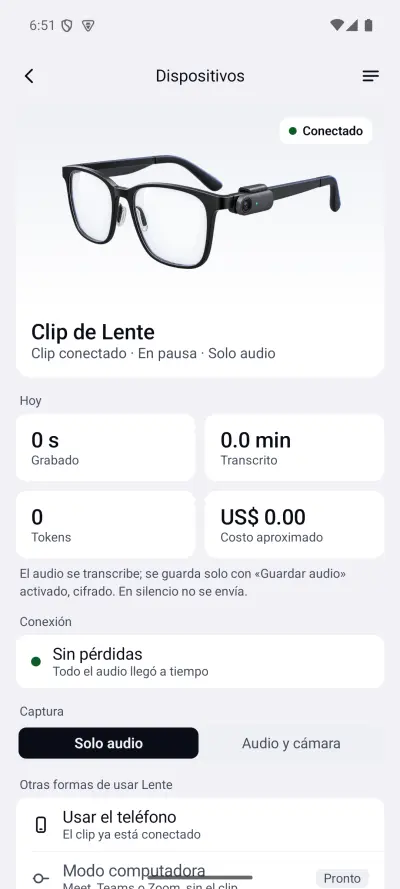
Dispositivos in the app: the clip connected, with what it recorded today and its approximate cost.
The clip. Connected, with what it recorded today and what it cost.

Real screens of the Android app, with synthetic sample data (PROBE) and the stubbed Meta API.
One Lente, three moments

It hears and sees what you do, remembers what happened and talks back. Every number comes from a measured run in docs/benchmarks.md.

Dilo («say it») · in meetings

One line to say, right on time.

When someone asks you something in your second language, Lente puts a sentence you can say right away on your phone, with its meaning in Spanish underneath. Afterwards you keep the notes, the decisions and the tasks.

3.02 smedian from the end of the question to the card on the phone (n = 17, synthetic eval, 2026-10-28).

A real screen of the app with a DILO card: «Yes, Friday works if QA signs off Thursday.»
Real screen of the app · test data

Ver («see») · for people who are blind or have low vision

It tells you what is in front of you, when you ask.

A companion that talks. Tap the screen and it describes what the camera sees; ask it «¿qué tengo en la mano?» (what am I holding?) or «¿dónde estoy?» (where am I?) and it answers out loud. It can narrate what changes and stay quiet while it records. It works with TalkBack.

It is a prototype: not a medical or mobility device, and no replacement for your cane, your guide dog or your own judgement.

3.36 smedian from the clip's photo to its description on the phone (n = 35, the real clip with the hub on Modal, 2026-11-04).

Ver · Narrando

Al frente, una puerta azul. A tu derecha, una mesa con una taza.

Toca: mirarMantén: pausarDos dedos: narración

An illustration of the interface · test data. Lente speaks Spanish first: «Ahead, a blue door. To your right, a table with a cup.»

Practicar («practice») · at the piano

A patient teacher who hears every note.

The phone hears the note you play, without sending the audio anywhere, and marks each note of the lesson. When you finish, Muse Spark 1.3 gives you one or two sentences of coaching in Lente's voice.

SoonThe number arrives with the run at the piano.

LECCIÓN 1

Otra vez · Siguiente

Escala de Do mayor

  1. Do, bien
  2. Re, bien
  3. Mi, bien
  4. Fa, faltó
  5. Sol, ahora
  6. La
  7. Si
  8. Do

Ahora oigoSol

«Muy bien. Te saltaste el Fa en la cuarta nota; tócala otra vez más despacio.»

An illustration of the interface · test data. «Very good. You skipped the F, the fourth note; play it again, more slowly.»

Memory

It remembers what happened. And tells you where it heard it.

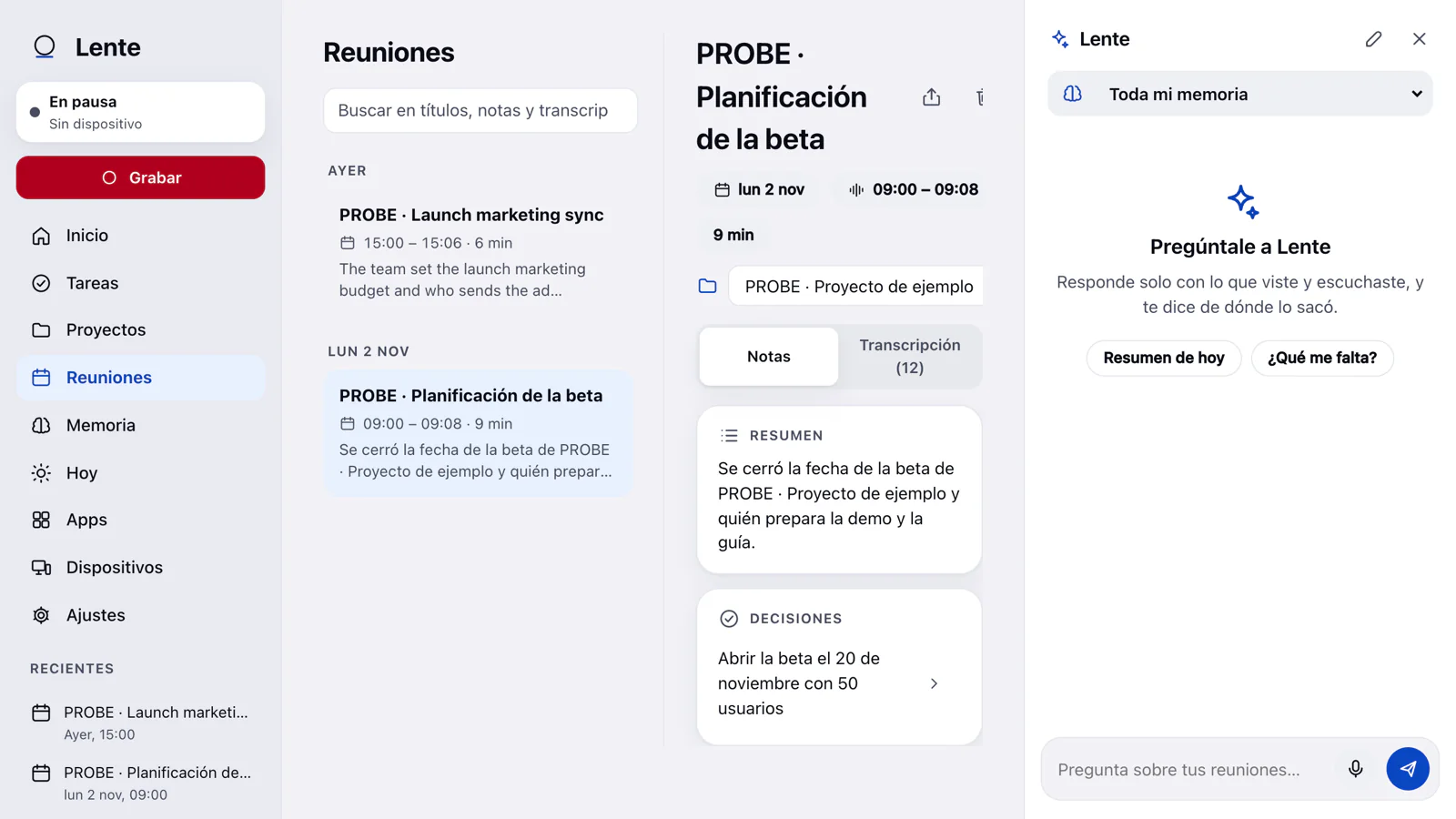
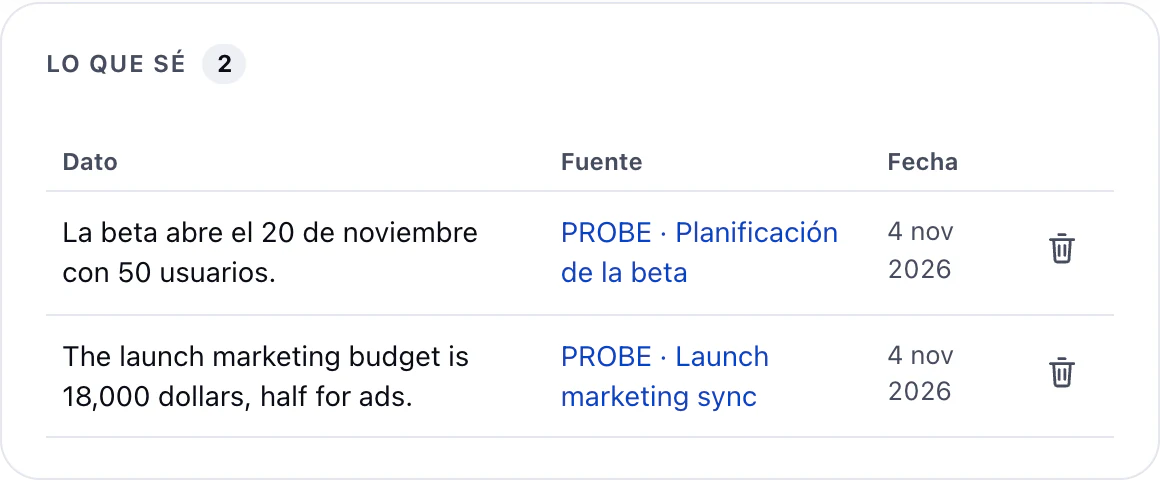
Every meeting becomes notes, decisions and commitments. What matters moves to «Lo que sé» (what I know), with the line that backs it. Ask in Spanish about a meeting held in English and it answers with the source.

Lente's web app with a sample meeting open: its summary, the decision to open the beta on November 20 with 50 users and its commitments, next to the «Pregúntale a Lente» (ask Lente) panel.
The «Lo que sé» (what I know) card with two kept facts, each with the meeting it came from.
Real screens from Lente's web app · PROBE sample data, synthetic
  • With its source

    Every answer links the meeting it came from: 88 of 93 cited the right meeting.

  • Fast

    The first sentence arrives in 2.66 s; it used to take 8.56 s (median, 30 questions over 30 synthetic days).

  • It knows when to say no

    If it isn't in your memory, it says it can't find it: 15 of 15 trap questions.

  • Your story Soon

    Go back to any moment of your day as you lived it, and forget the ones you choose.

Apps

An open store for your glasses.

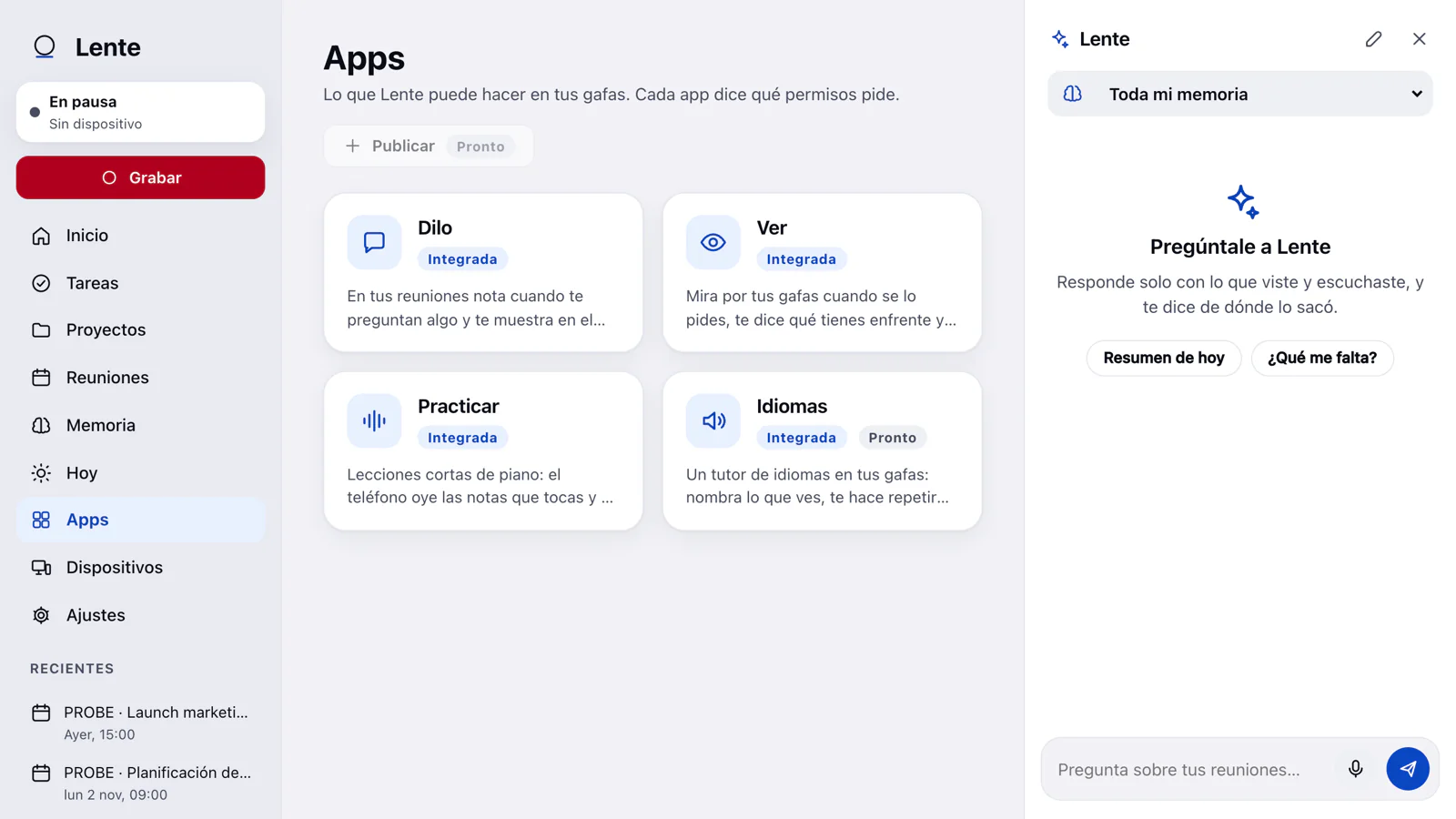
Dilo, Ver and Practicar are already apps, and Idiomas arrives as the fourth. Soon anyone will publish their own: a tutor, a museum guide, a recipe that watches your counter. One clip, and every app the community imagines.

The «Apps» catalog in Lente's web app: Dilo, Ver and Practicar built in, and Idiomas marked «Pronto» (soon).
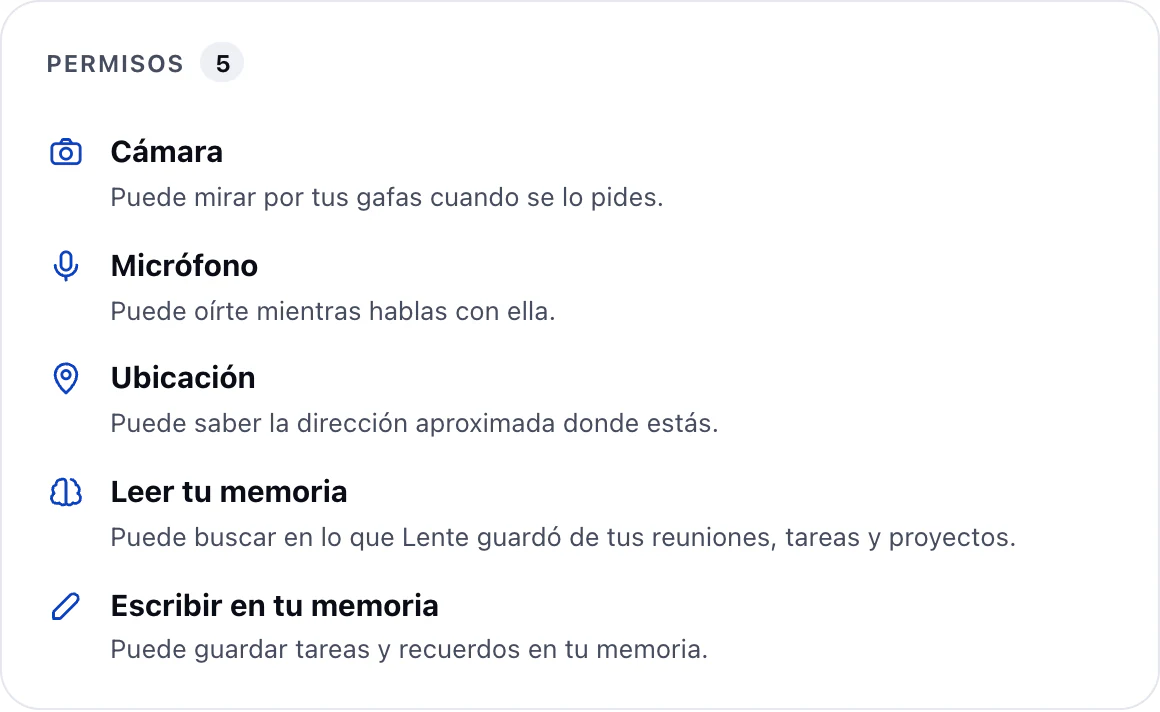
The five permissions Ver asks for: camera, microphone, location, read your memory and write to your memory, each with what it allows.
Real screens from Lente's web app · PROBE sample data, synthetic
  • An app is data, never code

    A manifest Lente validates: what it does, what it asks for and which tools it may use. No stranger's code runs on your glasses.

  • Permissions in plain sight

    Every app says what it asks for before you install it, and Lente will check them in code, never in a prompt.

  • Try it, leave no trace Soon

    A sealed session that keeps nothing: no chat, no memory.

  • Publish your own Soon

    The community publishes; every app is reviewed before it appears, and anyone can report it.

Meta's models

Each model has its own job.

And every job is timed by a script in the repository, with synthetic voices and memories, never real meetings.

  • Hear the meeting and tell speakers apart

    muse-voice-transcribe-1.0 · DIARIZATION, realtime

  • Hear you when you talk to Lente

    muse-voice-transcribe-1.0 · ENDPOINTING

  • The Dilo line and its Spanish meaning

    muse-spark-1.3 · minimal reasoning, streamed

  • Read what the camera sees

    muse-spark-1.3 with image input

  • Conversation: the voice agent over your tasks, your memory and the web

    muse-spark-1.3 with function calling and web_search

  • Notes, decisions, tasks and memory cards

    muse-spark-1.3 with structured output

  • Answers from your memory, with the source

    muse-spark-1.3 · one call over a local index

  • Coaching at the piano

    muse-spark-1.3

  • Fast lane

    Muse Spark Open on Baseten, open weights

Measured

  • 3.02 sQuestion ends → Dilo cardp50 · 4.75 s p95 · eval, 10 synthetic dialogues, 2026-10-28
  • 76% · 81%"Was this question for me?": precision and recallsame run
  • 323 msYou stop talking → your turn is readyp50 · scripts/bench-voice.ts, 2026-11-02
  • 3.21 sYou stop talking → first sentence of the answerp50 · same run
  • 90 of 105Memory answers that are accurate, with the right sourcegrounding eval, 2026-11-03
  • 15/15 · 10/10«No lo encuentro» («I can't find it») on trap questions: out of memory · out of projectsame run

The full runs, with what went wrong, are in docs/benchmarks.md.

Try it

Sign in with your Google account.

While the hackathon is judged, any Google account can sign in. Your memory is yours alone.

  1. Sign in

    With Google on the web, or in the Android app with «Iniciar sesión con Google».

  2. Accept the terms

    The preview terms, once.

  3. Ask the sample

    Your account starts with «PROBE · Proyecto de ejemplo»: two made-up meetings, tasks and memories. Ask in Spanish or English.

    • ¿Qué se decidió sobre la beta?
    • ¿Qué tareas tengo pendientes?
    • What can you do for me?
  4. No clip needed

    In the app, «Usar el teléfono» turns the phone's microphone and camera into the clip. On the web, record with your computer's microphone or camera, or a Meet or Zoom tab.

  5. Delete it whenever you like

    Ajustes → «Borrar ejemplo», or your whole account with all its data.

There is a daily limit per person and one for everyone. If you reach it, Lente tells you, and you can come back the next day.

Install the Android app

QR code that opens the lente.apk download from GitHub
  1. On your Android phone, open lente.apk or scan the code.
  2. If Android asks, allow installing apps from that source (your browser or your files app) and tap «Instalar» (Install).
  3. Open Lente and tap «Iniciar sesión con Google».

Android 10 or later. Not on Google Play yet; the notes for each version are on GitHub Releases.

The clip

Built by hand, in ten days. Build yours.

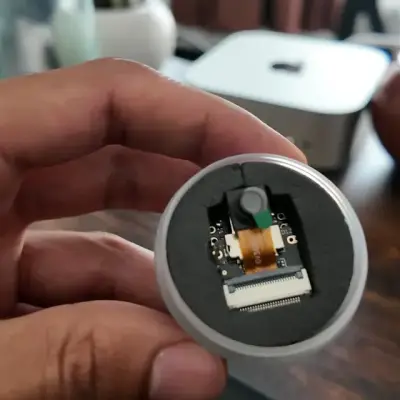
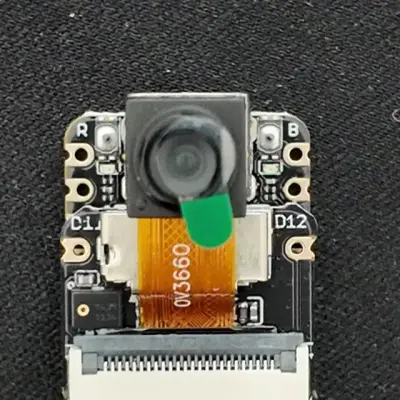
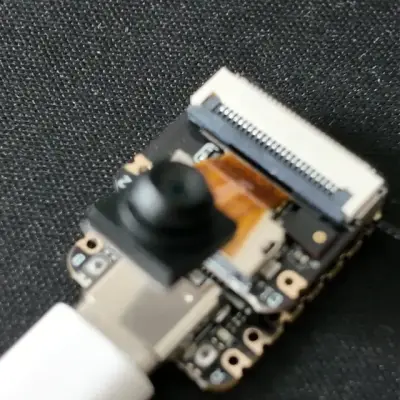
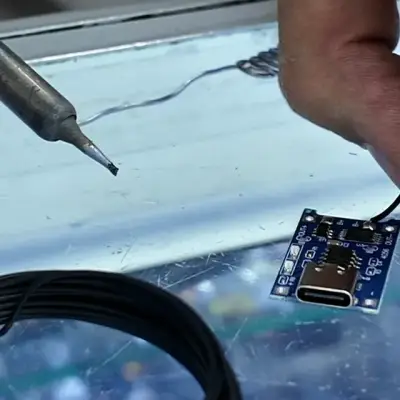
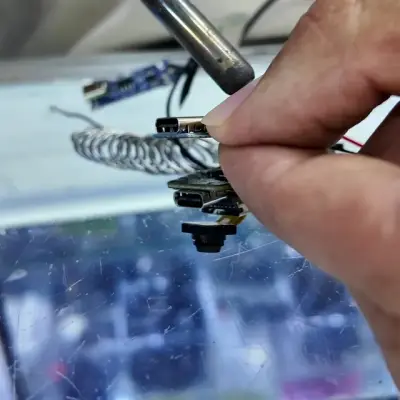
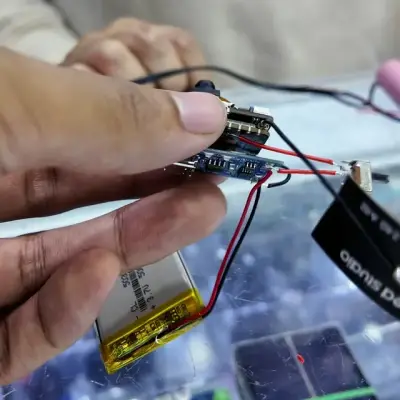
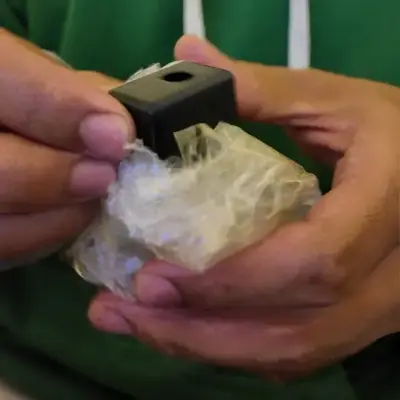
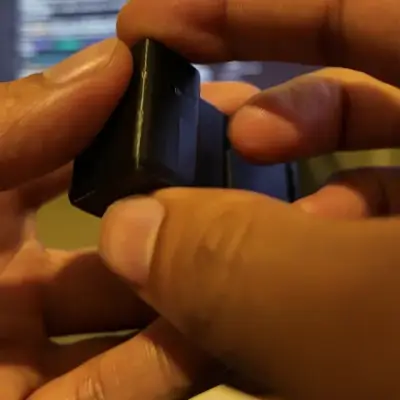
Built solo in Bogotá during the hackathon: the board arrived on October 27, on the 29th it was soldered at an electronics shop, and that night it was in its printed case. It straps to any pair of glasses.

  1. A hand holds the open case with the Seeed XIAO ESP32-S3 Sense board.Oct 27. The board arrives: camera, mic and Wi-Fi.
  2. The board from above, its OV3660 camera on a flex cable.Oct 27. The camera, before any soldering.
  3. The board with a USB-C cable plugged in for its first power-on.Oct 27. First power-on.
  4. A soldering iron over a blue USB-C battery charger.Oct 29. Soldering the charger.
  5. Hands soldering wires to the clip's board.Oct 29. Wires to the board.
  6. In a hand, the assembled electronics: board, charger, switch and a yellow battery.Oct 29. It runs on its battery.
  7. Hands unwrap a black 3D-printed case with a hole for the camera.Oct 29. The printed case.
  8. The finished clip in its case, in a hand.Oct 29, night. Everything inside.
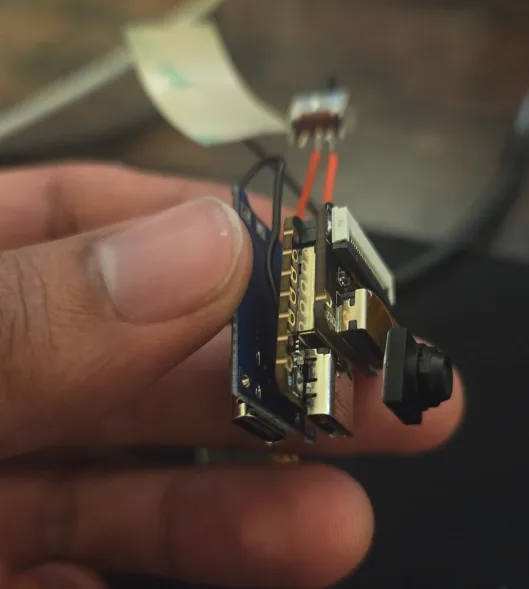
A hand holds the clip's first rig: the Seeed XIAO ESP32-S3 Sense board with its camera, a USB-C charger and a switch.
Real photo · the first rig, 2026-10-29
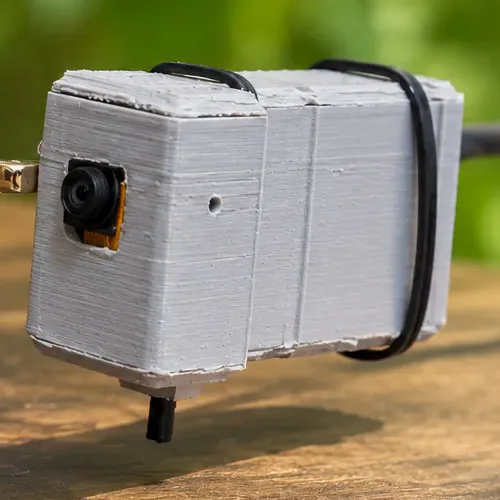
Close up, the finished clip: the grey 3D-printed case with the camera peeking through a window, held to the temple by two black rubber bands.
Real photo · the clip in its case

Parts

  • Seeed XIAO ESP32-S3 Sense: camera, microphone and Wi-Fi on one board
  • A one-cell LiPo battery and its USB-C charger
  • A slide switch
  • Optional: a vibration motor for silent cues

Case and firmware

Built during the hackathon

Every line of code, written since 2026-10-26.

Each day of work has its row in the build log. Every feature started as an OpenSpec change, with a proposal, a design, specs and tasks.

Privacy

Your memory is yours.

The preview terms, in short.

  • It is kept as text, sealed with a key that is yours alone. Audio and photos are kept only for the author's account; every other account keeps text only.

  • You can delete your account at any time, and all your data with it.

  • Lente calls Meta's Model API on free credits, which allow content to be used for product improvement. Don't share anything sensitive.

  • It is a hackathon prototype, not a medical or mobility device.

In short: Terms · Privacy. The text you accept when you sign in is on the hub: terms · privacy. Questions? In the repository's issues.